
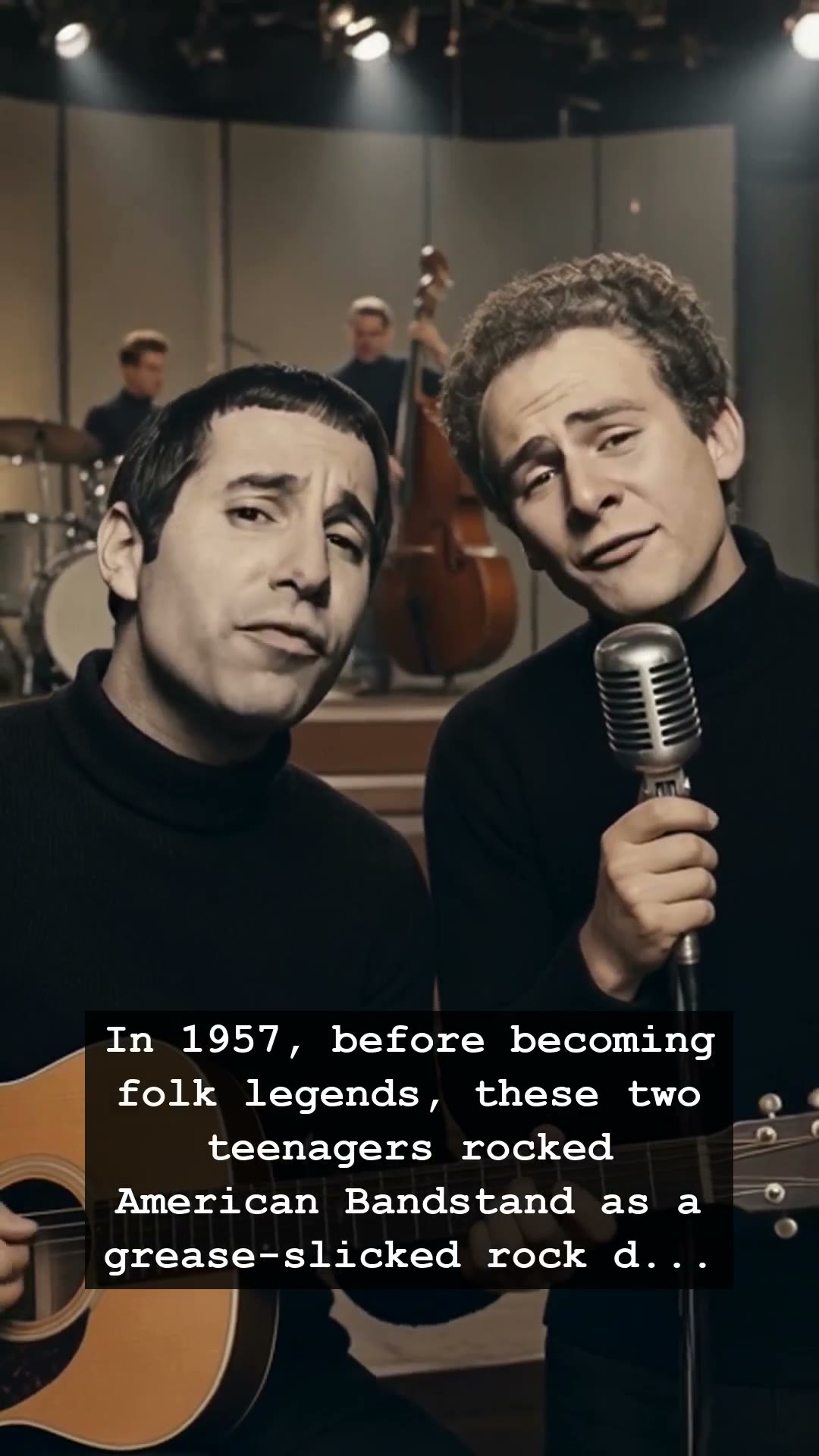
The year was 1957. A grainy, black-and-white broadcast of American Bandstand flickered in living rooms across America, showing two fresh-faced, sixteen-year-old boys standing under the hot studio lights. They weren’t the pensive, introspective folk poets the world would eventually come to adore. Instead, they were slick-haired, leather-jacket-clad teenagers channeling the raw, rebellious energy of early rock and roll. This was the buried history of Simon and Garfunkel, a time when the legendary duo was known as Tom and Jerry, desperately chasing the ghost of Elvis Presley before they ever found their own melancholic sound.
Most fans today associate Simon and Garfunkel with the pristine acoustic harmonies of The Sound of Silence or the gentle folk storytelling of Bridge Over Troubled Water. Yet, before the global fame and the artistic tension that would eventually splinter their brotherhood, Paul Simon and Art Garfunkel were just two kids from Queens trying to navigate the volatile landscape of the late fifties music industry. They actually scored a minor hit with a song called Hey Schoolgirl, a catchy, bouncy track that echoed the burgeoning doo-wop scene of the era. It was a million miles away from the philosophical depths of their later work, yet it remains a fascinating relic of their early ambition.
Watching that archival footage today feels like peering through a cracked mirror into a lost decade. You can almost smell the hair pomade and see the heavy, glowing vacuum tubes of the old jukeboxes that defined that generation’s sonic life. This brief foray into rock stardom was their first taste of the industry’s fickle nature. It was an era where a teenager could rise from a basement recording session to the national stage overnight, only to vanish into obscurity just as quickly. For Simon and Garfunkel, this early failure was perhaps a blessing in disguise, pushing them toward the intellectual folk movement that would ultimately solidify their legacy as the definitive voices of their time.
Why does this forgotten chapter matter? It reminds us that every icon was once a beginner, stumbling through genres and searching for an authentic voice. The transition from the grease-slicked rock of their youth to the sophisticated, literate compositions of the sixties reflects the rapid transformation of American culture itself. They were a microcosm of the shift from the innocent, rhythmic rock of the fifties to the turbulent, reflective soul of the protest era. Their story is a testament to the fact that identity is never static; it is a painful, beautiful process of trial and error.
Even now, listening to those early, crackling recordings, you can hear a flicker of the chemistry that would change music history forever. Beneath the outdated production and the youthful bravado, the unmistakable blend of their voices was already present. It is a poignant reminder that even the greatest artists have their humble, awkward beginnings. Whether you are a lifelong listener or a new fan discovering their catalog, looking back at their time as rock-obsessed teenagers adds a layer of humanity to the legends. It proves that behind the fame, the drama, and the massive stadium tours, there were always just two boys from Queens chasing a melody.