
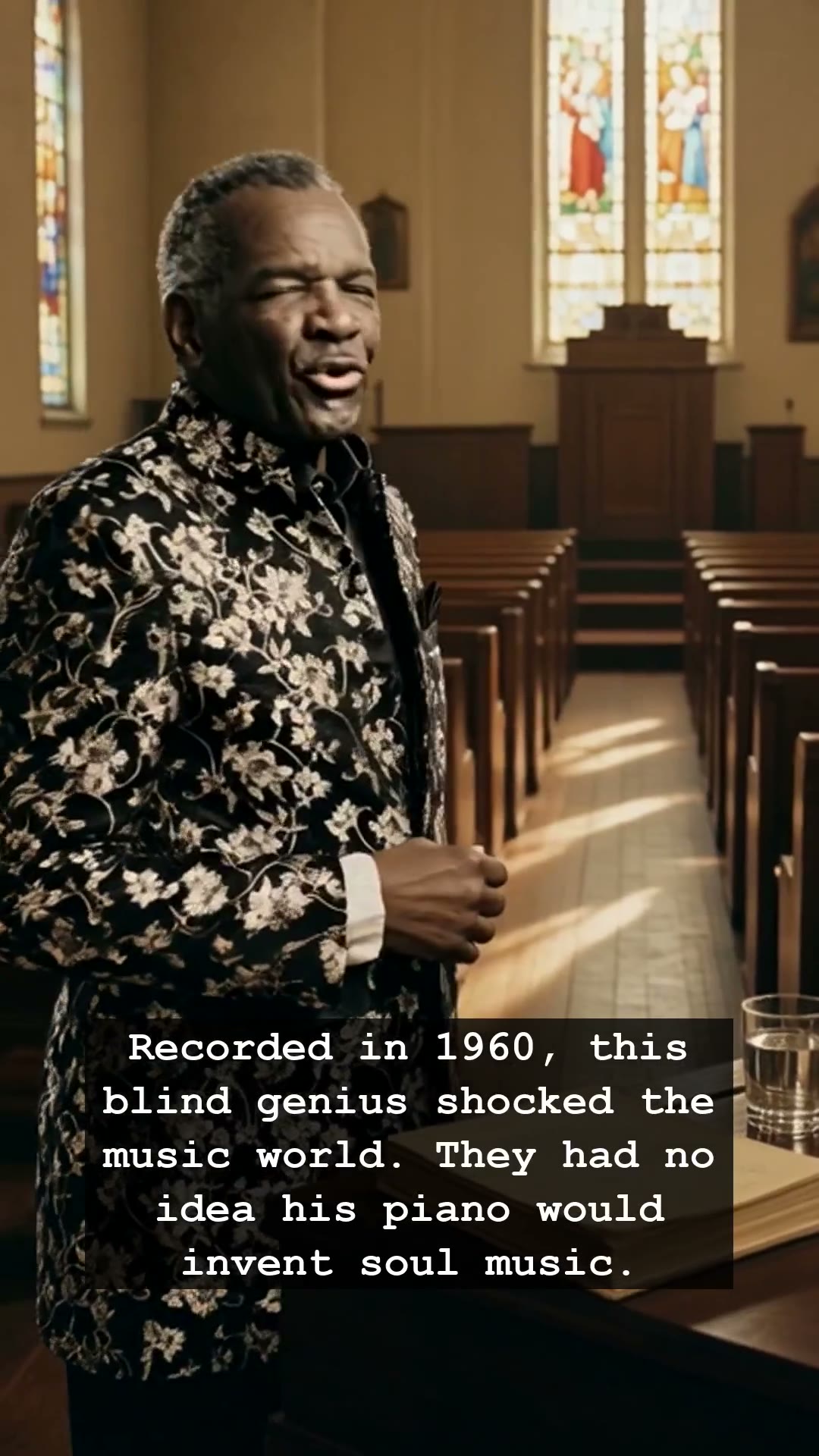
In 1960, the American airwaves were strictly segregated by genre, with gospel echoing through Sunday pews and blues confined to the dark, smoke-filled corners of local clubs. Then came a record that broke every unspoken rule in the industry. When the public first heard the syncopated, electrifying piano chords of Ray Charles, the music world did not just shift; it shattered. To the traditionalists of the era, this sound was nothing short of sacrilege. By daring to drag the raw, spiritual fervor of the church into the sinful, rhythmic domain of the blues, Ray Charles birthed a new language of sound that would eventually define the soul of a nation.
Born in the sweltering heat of the Georgia backwoods and hardened by a lifetime of navigating a world he could not see, Ray Charles possessed an internal vision that others could only envy. He was a man defined by contradictions: a master of technical precision who played with the chaotic, impulsive energy of a hurricane. While the jukeboxes of the late fifties were dominated by the polished pop of the day, Ray Charles was busy stripping away the artifice. He treated his piano not as an instrument, but as an extension of his own nervous system. When he sat at the keys, he wasn’t just performing; he was exorcising ghosts, transforming his personal isolation into a universal anthem of resilience that resonated from rural dives to the glimmering stages of the city.
The controversy surrounding his 1960 recordings was intense. Critics were baffled by the raw intensity he brought to his compositions, feeling that the fusion of sacred gospel melodies with secular blues lyrics crossed a line that should never have been blurred. Yet, for the listeners who crowded around their radios and purchased the spinning vinyl, the music felt like a homecoming. It captured the desperate, yearning heart of the American experience during a decade of profound social transition. Ray Charles didn’t care for the labels or the gatekeepers; he focused entirely on the truth of the chord, and in doing so, he taught an entire generation how to feel music rather than just hear it.
Looking back, it is impossible to imagine the musical landscape of the twentieth century without the profound influence of this blind genius. His legacy permeates everything from the Motown era that followed to the rhythmic complexity of modern rhythm and blues. He proved that even when the world is pitch black, one can create a light so blindingly brilliant that it changes the cultural trajectory of an entire era. Ray Charles was more than a musician; he was the architect of our collective emotional expression.
Even now, decades after those revolutionary sessions, the opening notes of a Ray Charles track possess the power to transport us back to a time of Walkmans and crackling vinyl. His story remains a testament to the idea that true art requires courage—the courage to offend, to experiment, and to defy expectation. As the echoes of his piano fade, we are left with a simple question: in a world obsessed with conformity, are we still listening for the truth as clearly as he did?