
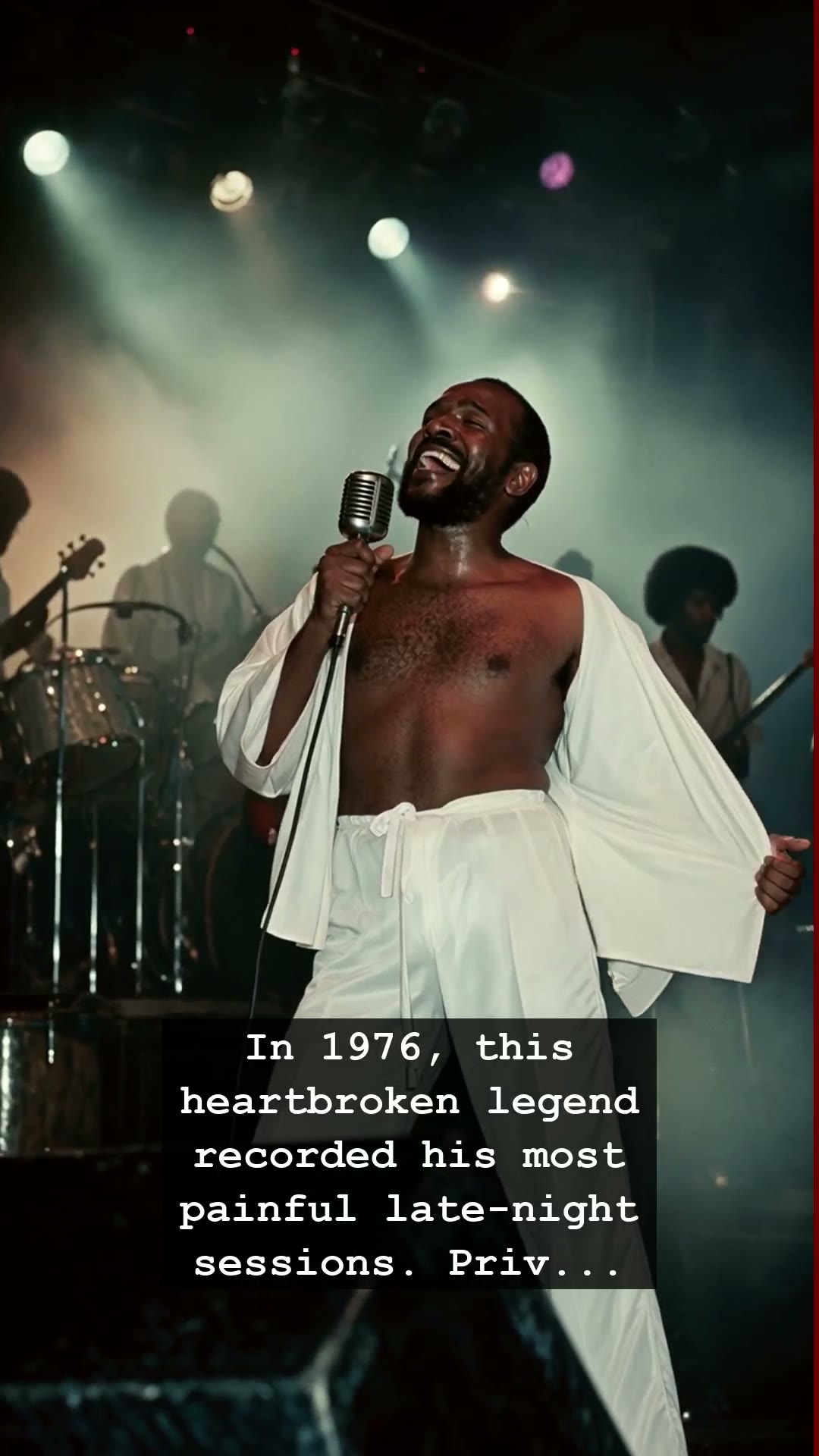
The year was 1976, and the air in Los Angeles was thick with the scent of cigarettes and the fading remnants of the disco revolution. Inside the dimly lit walls of a recording studio, Marvin Gaye was not just singing; he was hemorrhaging his soul. The Prince of Motown, a man whose voice had defined a generation of love, was spiraling into a deep, jagged chasm of personal tragedy. His marriage to Anna Gordy was disintegrating in real-time, a public spectacle of resentment that mirrored the messy, volatile reality of a man who gave the world romance while his own heart lay in pieces on the studio floor.
While the rest of the world was catching the pulse of the era via the glowing screens of new color televisions or escaping reality through the neon-drenched doors of Studio 54, Marvin Gaye retreated into the shadows. He teamed up with producer Leon Ware, turning the studio into a confessional booth. There were no bright lights here, no polished choreography, just the raw, unfiltered hum of human suffering. During these midnight sessions, Marvin Gaye didn’t just record tracks; he channeled his humiliation, his longing, and his utter exhaustion into a hypnotic tapestry of sound that would eventually emerge as I Want You.
What made these sessions so haunting was the complete absence of a filter. Marvin Gaye possessed a rare, almost terrifying ability to transform his private anguish into something universal. Every breath he took into the microphone was heavy with the weight of his unraveling life. Leon Ware acted as the architect, creating a lush, percussive soundscape that allowed Marvin’s vocals to float—vulnerable, erratic, and deeply intoxicating. It was an evolution from the soulful protest anthems of his early seventies work toward a darker, more intimate brand of funk that felt like a secret shared in the dark.
Looking back, it is impossible to divorce the music from the man’s misery. The era was one of excess and rapid cultural shifting, yet Marvin Gaye remained anchored in the ancient, painful art of the blues. He captured the essence of late-night solitude in a way that remains unmatched by modern production. When you listen to those tracks today, you aren’t just hearing a legendary rhythm; you are hearing the sound of a man trying to survive his own fame and his own heart. It is the audio equivalent of a late-night drive through an empty city, where the streetlights blur into streaks of loneliness.
This 1976 period serves as a stark reminder that even the most golden voices are not immune to the crushing gravity of the human experience. Marvin Gaye managed to pull beauty from the wreckage, leaving behind a legacy that resonates with anyone who has ever tried to dance through a heartbreak. His late-night sessions did more than just produce hits; they immortalized the fragile, messy truth of a legend. Decades later, we still reach for these records when we need to feel understood. Do you still remember the soulful cry of a man who gave everything to his music, even when he had nothing left for himself?