
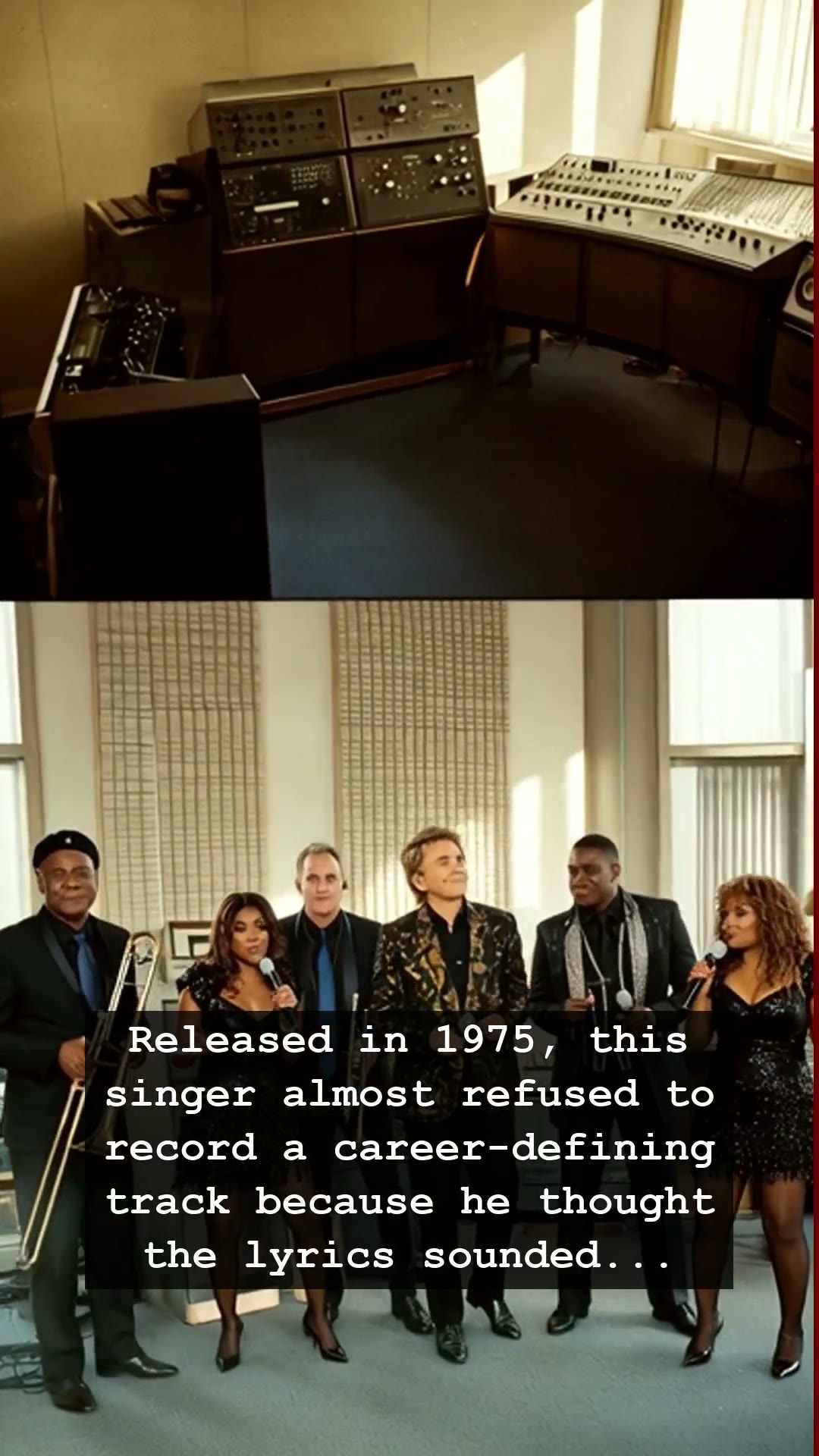
It was 1975, a year defined by the velvet textures of the radio, the rise of the disco movement, and the golden age of the power ballad. Amidst the swirling changes in the music industry, a young Barry Manilow was handed a song that would eventually define his entire career. Yet, when he first sat at the piano to rehearse the lyrics of I Write the Songs, he recoiled. To the humble songwriter, the words felt painfully self-aggrandizing. How could he, a man who had spent years honing his craft in the shadows of the industry, sing lines claiming to be the source of all music? He initially refused to record it, convinced that the world would perceive him as an arrogant newcomer with an overblown ego.
This wasn’t just any era of pop music; it was a time when the jukebox was king and the airwaves were fiercely competitive. Artists were expected to project a persona that commanded attention, but Barry Manilow was a musician’s musician, a man who preferred the intimacy of the studio over the bombast of the spotlight. The tension between his natural modesty and the sweeping, theatrical demands of mid-70s radio created a genuine internal conflict. He believed the lyrics were a bit too much, a bit too loud, and entirely contrary to his artistic identity. It took a leap of faith to finally commit to the track, a decision that would transform him from a talented songwriter into a global superstar.
Once the song hit the airwaves, any fear of audience rejection vanished. It soared to the top of the charts, becoming a definitive anthem that echoed through living rooms and concert halls for decades. Whether you heard it on a spinning vinyl record or a crackling car radio, the melody possessed a universal quality that transcended the drama of its origin. Barry Manilow found himself riding a wave of massive success, eventually winning a Grammy for the song, proving that his initial hesitation had been a misunderstanding of how deeply the audience craved his particular brand of emotional sincerity.
Looking back at that era, it is fascinating to realize how close we came to missing out on this definitive classic. The story of Barry Manilow and his breakthrough anthem serves as a reminder of the fragility of musical history. In the glamorous world of 1975, where fame was as fleeting as a disco beat at Studio 54, a single moment of doubt could have changed the trajectory of pop music forever. Instead, he leaned into the vulnerability of the performance, turning a song he once hated into a legacy that cemented his place in the pantheon of American music.
Today, when those iconic piano chords begin to play, we are transported back to a simpler time. Barry Manilow remains a pillar of that golden age, a testament to the fact that sometimes the best art comes from the struggle to be heard. His story reminds us that even our most reluctant moments can turn into our greatest achievements, echoing long after the final note fades.