
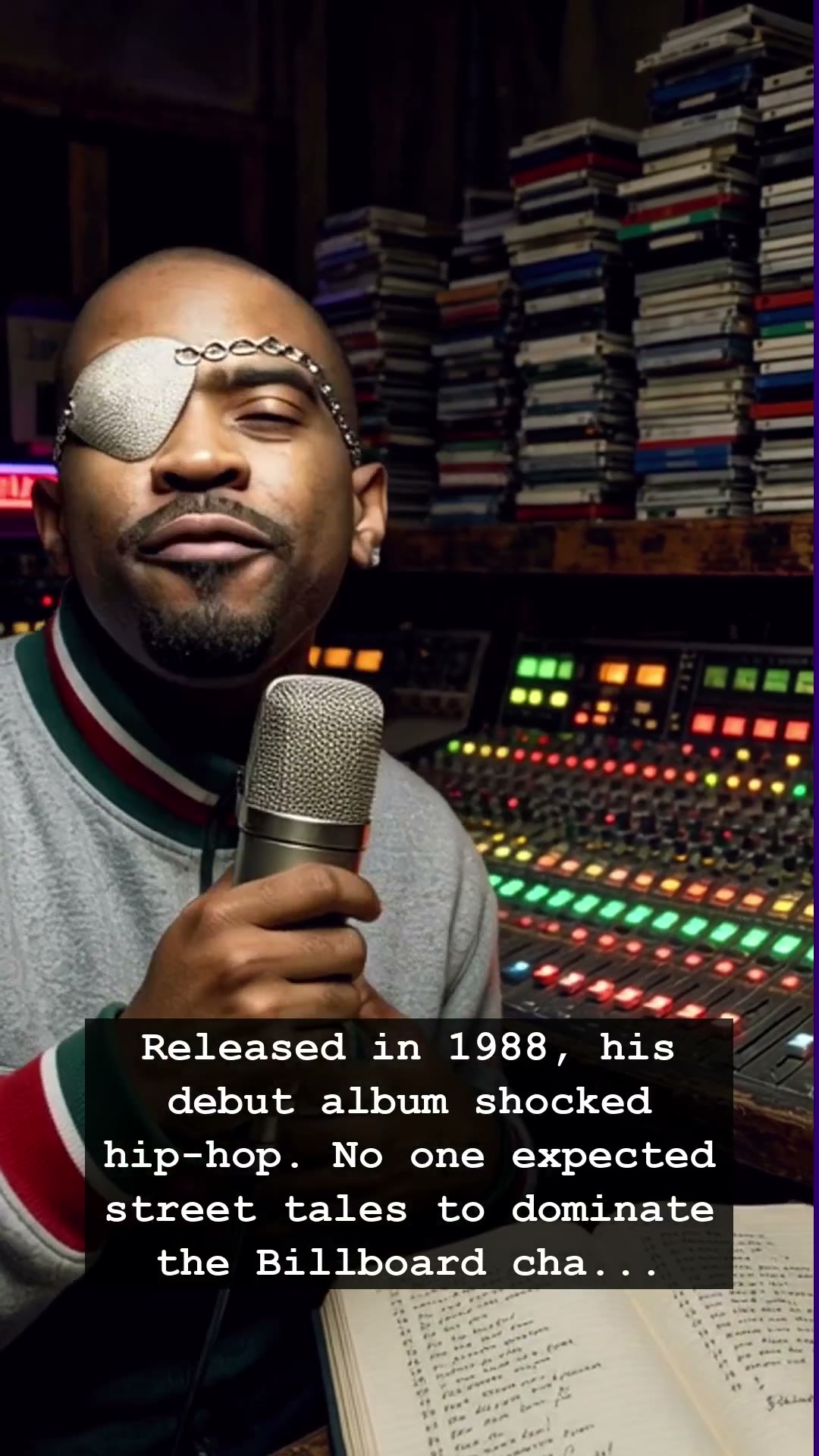
In 1988, the airwaves were crowded with the aggressive, booming bravado of New York rap, but then came a voice that sounded like a velvet-tongued narrator from a dark, neon-lit alleyway. Slick Rick arrived on the scene with his debut album, The Great Adventures of Slick Rick, and nothing in hip-hop was ever the same again. At a time when the world was beginning to embrace the convenience of the Walkman and the burgeoning cultural dominance of early MTV, Rick proved that street tales did not need to shout to be heard. He transformed the raw, gritty reality of urban life into cinematic masterpieces, forever changing the DNA of musical storytelling.
Before Slick Rick took the microphone, rap was largely defined by party anthems and simple rhythmic boasts. Rick, however, brought a theatrical sophistication that felt more like a noir film than a standard studio record. His delivery was smooth, deliberate, and undeniably charismatic, turning every verse into a vivid, heart-pounding scene. Listeners found themselves captivated by tracks like Children’s Story, which painted a cautionary tale so haunting and realistic that it felt as though it were being whispered directly into their ears. He wasn’t just a rapper; he was a master storyteller whose cadence demanded total attention from the listener.
The genius of Slick Rick lay in his ability to blend the harsh truths of the street with a flamboyant persona that felt almost otherworldly. While his peers were focusing on technical complexity, Rick was focused on world-building. He utilized his unique British-inflected flow to navigate complex narratives, proving that hip-hop could carry the same weight and emotional resonance as a classic novel. This shift in the late eighties signaled a turning point where rap artists began to see themselves as authors of their own cultural history, setting the stage for the narrative-heavy albums that would define the next two decades of the industry.
Yet, the story of Slick Rick is not without its dramatic shadows. Behind the polished lyrics and the rapid ascent to the top of the Billboard charts, the pressures of sudden fame and the tumultuous landscape of the late 80s music industry took a heavy toll. He navigated a world filled with shifting loyalties, label politics, and the relentless scrutiny of a public that couldn’t quite decide if he was a caricature or a visionary. This era, characterized by its transition from the analog grit of the past to the polished commercialism of the near future, provided the perfect, volatile backdrop for his rise.
Today, the legacy of Slick Rick resonates more than ever. Every time a modern artist uses a narrative structure or adopts a character persona to tell a story of struggle and triumph, they are walking the path he paved. His work remains a timeless reminder that authenticity and imagination are the most potent tools in any musician’s arsenal. If you listen closely, you can still hear the echoes of 1988 in every verse that dares to tell a deeper story. Take a moment to revisit those tracks today, and you will find that the adventures of Slick Rick are still just as captivating as the very first time they hit the airwaves.