
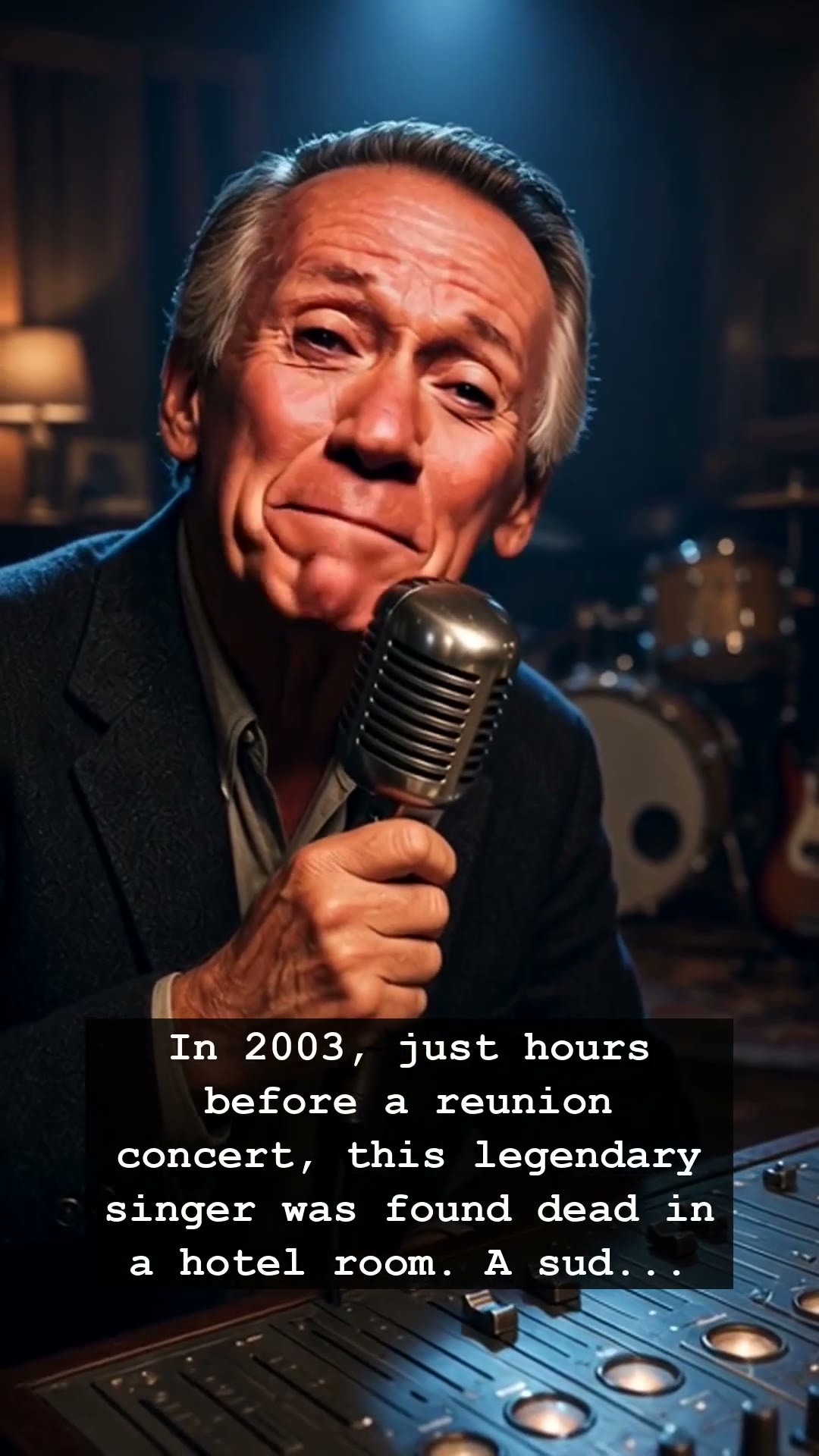
It was November 5, 2003, and the air in Kalamazoo, Michigan, was supposed to be thick with the anticipation of a triumphant return. Fans had gathered, clutching tickets for a long-awaited Righteous Brothers reunion tour, their hearts set on hearing that iconic, soaring tenor that had defined a generation. But the curtain never rose. Instead, the music world went deathly silent when Bobby Hatfield, the man whose voice anchored the blue-eyed soul movement, was found unresponsive in his hotel room just hours before showtime. He was only 63, and the sudden tragedy sent a shockwave through the industry, marking a somber end to a legendary career that had spanned the golden age of American rock and roll.
To understand the magnitude of this loss, one must travel back to the mid-1960s, a time when the Jukebox was the heartbeat of every neighborhood diner and the airwaves were dominated by the Wall of Sound. Bobby Hatfield and his partner Bill Medley weren’t just singers; they were architects of an emotional landscape. Their masterpiece, You’ve Lost That Lovin’ Feelin’, didn’t just top the charts—it became a cultural touchstone. Hatfield’s ability to inject raw, agonizing vulnerability into every verse turned their songs into anthems for the lovelorn and the hopeful alike. During an era of fast-paced change, Bobby Hatfield provided a constant, soulful anchor that resonated deeply with those coming of age in the post-war American dream.
Behind the velvet harmonies and the polished stage presence, however, the life of a touring musician in the 60s and 70s was often a grueling, high-pressure existence. The relentless touring schedules, the flickering neon of transient hotels, and the heavy toll of fame often left cracks in the armor of even the brightest stars. While Bobby Hatfield remained a consummate professional on stage, his journey was not without the personal turbulence common to so many icons of the rock era. He navigated the rise of the counterculture, the transition from radio to the early days of MTV, and the shifting tides of popularity, always maintaining that distinct, haunting vocal quality that made him irreplaceable.
Even decades after their prime, the music of The Righteous Brothers continued to cast a long, beautiful shadow. Whether it was the cinematic resurgence of their hits in films or the enduring legacy of their soul-stirring melodies on classic radio, Bobby Hatfield never truly faded from the public consciousness. He represented a bridge to a simpler, more melodic time—a reminder of when a voice and a piano could command the attention of a nation. His passing in that quiet hotel room was a stark, brutal contrast to the vibrant, booming energy he exuded every time he stepped into the spotlight.
Today, we look back at his life not just through the lens of tragedy, but through the vibrant music that continues to play in the background of our collective memories. Bobby Hatfield lives on in the crackle of a vinyl record, the sudden swell of an orchestra in a movie scene, and the hushed whispers of fans who still remember the magic of his performance. The music industry may have moved on to new sounds and new stars, but the echo of his final, perfect note still hangs in the air, a testament to a voice that time can never truly silence.