
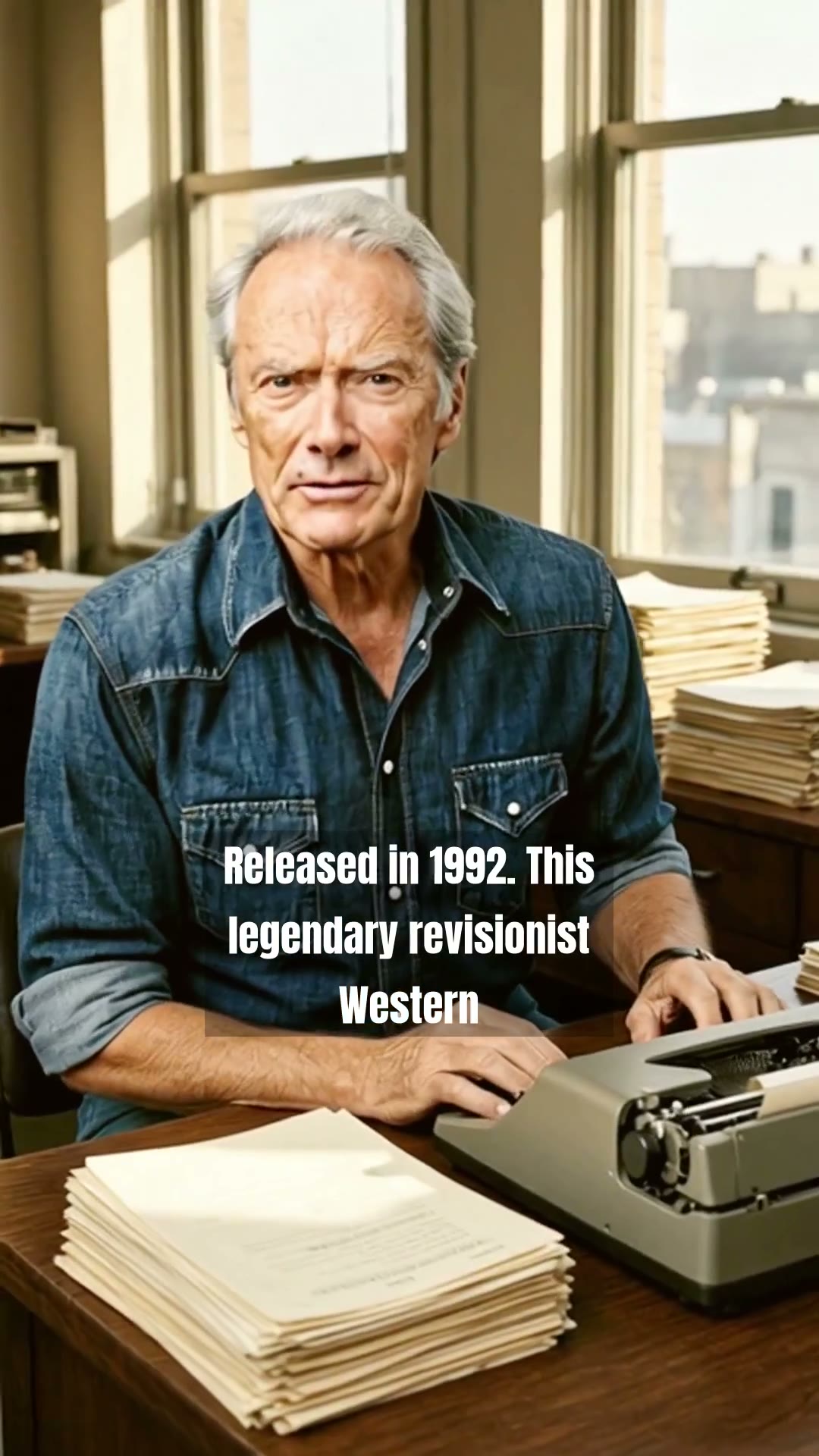
In the vast gallery of Hollywood legends, few figures command the same stoic reverence as Clint Eastwood. To revisit his filmography is to walk through the evolution of American cinema itself, from the rough-hewn charm of the spaghetti westerns to the complex, psychological depths of his later works. For those of us who grew up with the ritual of Saturday night movie marathons and the tactile magic of sliding a VHS tape into the player, Clint Eastwood represents a bridge between the Golden Age of Hollywood and the grittier, more reflective sensibilities of the New Hollywood era.
Perhaps the most poignant chapter in his storied career occurred in 1992 with the release of Unforgiven. At the time, the project seemed like a relic of a bygone era. The screenplay had been gathering dust in studio drawers for over two decades, rejected time and again by producers who believed the audience had lost their appetite for the traditional Western. It was seen as too dark, too introspective, and entirely out of step with the blockbuster-obsessed market of the early nineties. Yet, Clint Eastwood saw something beneath the surface—a chance to deconstruct the myths he had helped build.
He possessed a quiet, steely determination, the kind nurtured by years of honing his craft under the watchful eyes of legendary directors. By taking the helm as both director and star, he transformed what was dismissed as a gritty footnote into a monumental revisionist Western. When the film finally hit the screen, it did not just capture the attention of audiences; it commanded the respect of the Academy. The journey from a rejected manuscript to the pinnacle of Oscar night remains one of the most inspiring tales of artistic conviction in industry history.
Watching that film today, one cannot help but admire the masterful Method Acting techniques that Clint Eastwood brought to the role of William Munny. He peeled back the layers of the archetypal gunslinger, revealing the weary, haunted soul hiding behind the legendary silhouette. It was a performance that spoke to the sacrifices made in the pursuit of a reputation and the heavy toll of a life defined by violence. He didn’t just play a character; he interrogated the very foundation of the Western genre, ensuring that the legacy of these stories would endure for generations to come.
As we look back at the era of celluloid and flickering silver screens, it is clear that Clint Eastwood was never just an actor. He was a steward of American storytelling. His ability to weather the changing tides of Hollywood while staying true to his own uncompromising vision is a testament to the power of artistic resilience. Whether you remember him from the early days of the Walk of Fame or discovered his directorial genius later on, his impact remains indelible.
Though times have changed and the VHS tapes have long been tucked away on our shelves, the artistry of Clint Eastwood continues to resonate. His work reminds us that the best stories are often the ones that refuse to go quietly. We invite you to revisit these cinematic treasures and rediscover the quiet, enduring power of a true Hollywood icon.