
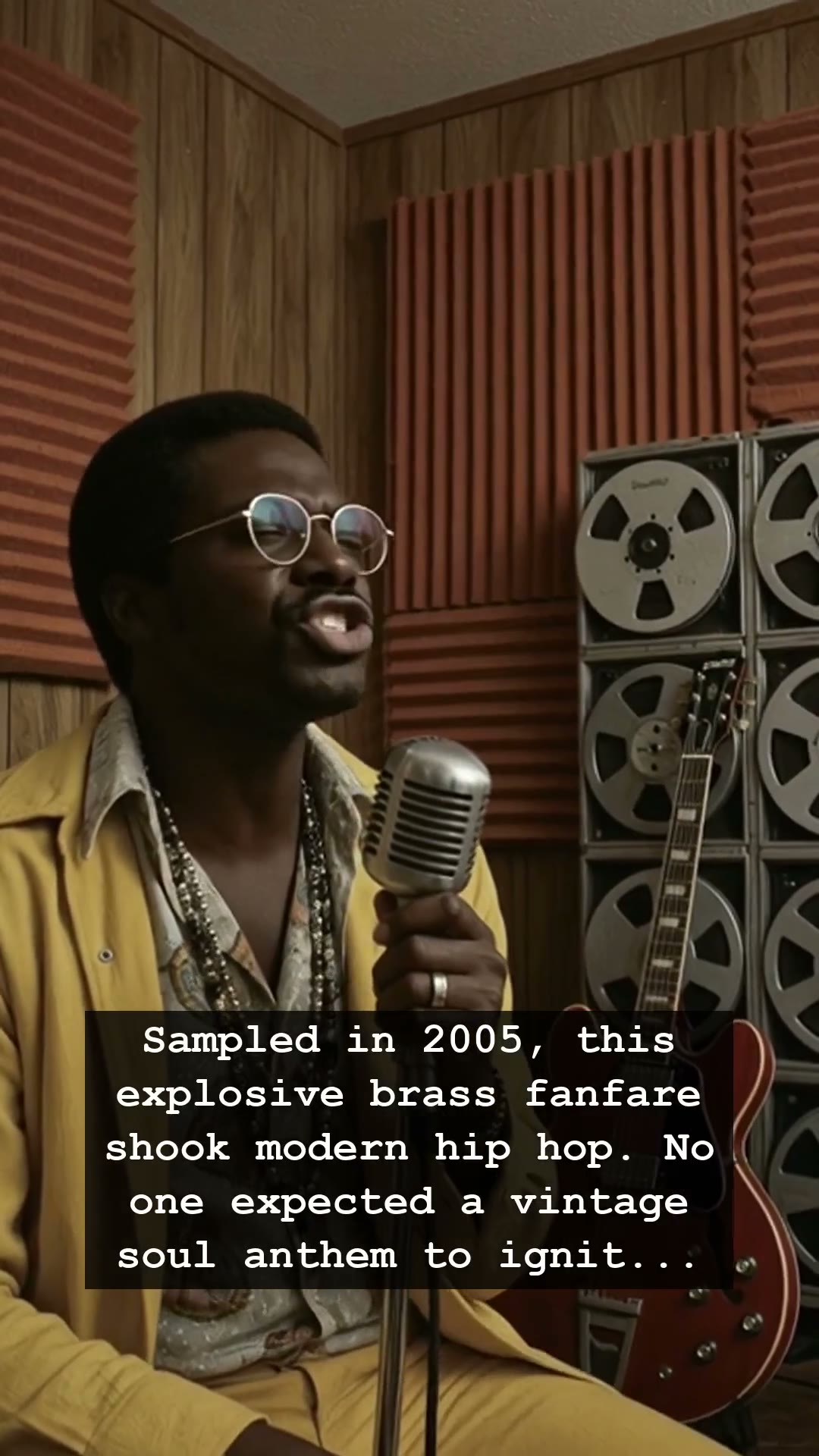
The year is 1970, and the world is shifting under the weight of political upheaval and social change. Amidst this backdrop, Curtis Mayfield, a titan of soul and rhythm, releases an explosive brass fanfare that would define a generation of sound. Decades later, in 2005, that same brassy, defiant energy would erupt once more, vibrating through the speakers of modern hip hop and shaking the charts to their very core. It was a moment of artistic alchemy where the analog warmth of the past violently collided with the digital precision of the future, proving that true genius never actually fades; it simply waits for the right moment to reclaim its throne.
To understand why the music of Curtis Mayfield resonates with such primal power, one must look at the man himself. Born into the heart of the Chicago soul scene, Mayfield was not merely a musician; he was a street poet with a guitar and a moral compass. He navigated the turbulent waters of the civil rights era with a smooth yet piercing falsetto, turning personal struggle into universal anthems. In an era dominated by the jukebox and the soul-stirring echoes of the club circuit, his arrangements were layered, sophisticated, and unapologetically bold. He possessed a unique ability to weave social commentary into melodies so infectious that listeners often found themselves dancing to the truth without realizing they were being schooled.
When producers began digging through the crates of history in the early 2000s, they weren’t just looking for a beat; they were hunting for a soul. They found it in the archives of Mayfield’s discography. When that brass fanfare was sampled, it brought a sudden, visceral jolt to the modern landscape. It wasn’t just a nostalgic nod; it was a revival. The unexpected fusion of 1970s grit with contemporary production proved that the DNA of Curtis Mayfield was woven into the very fabric of popular music. It served as a bridge between the gritty reality of his time and the high-octane ambition of the new millennium.
There is a certain tragedy in how often we forget the architects of our current cultural landscape. Curtis Mayfield faced immense personal hardship, including a devastating accident that left him paralyzed, yet his spirit remained unbroken, mirrored by the sheer endurance of his compositions. His music provided the soundtrack to the walkman era and stood tall against the rise of disco and the synth-pop takeover that followed. Even as synthesizers threatened to replace the raw soul of the studio, Mayfield’s brass sections remained the gold standard for intensity and emotional depth.
Today, when we listen to the tracks that defined the hip hop explosion of the mid-2000s, we are hearing a conversation across time. We are hearing the echo of a man who dared to challenge the status quo with nothing but a melody. The brass that once shook the concert halls of the seventies continues to ignite new generations, reminding us that music is a living, breathing lineage. As the needles drop and the samples loop, the legacy of Curtis Mayfield remains an undeniable force, echoing through the halls of history and refusing to be silenced by the passage of time.