
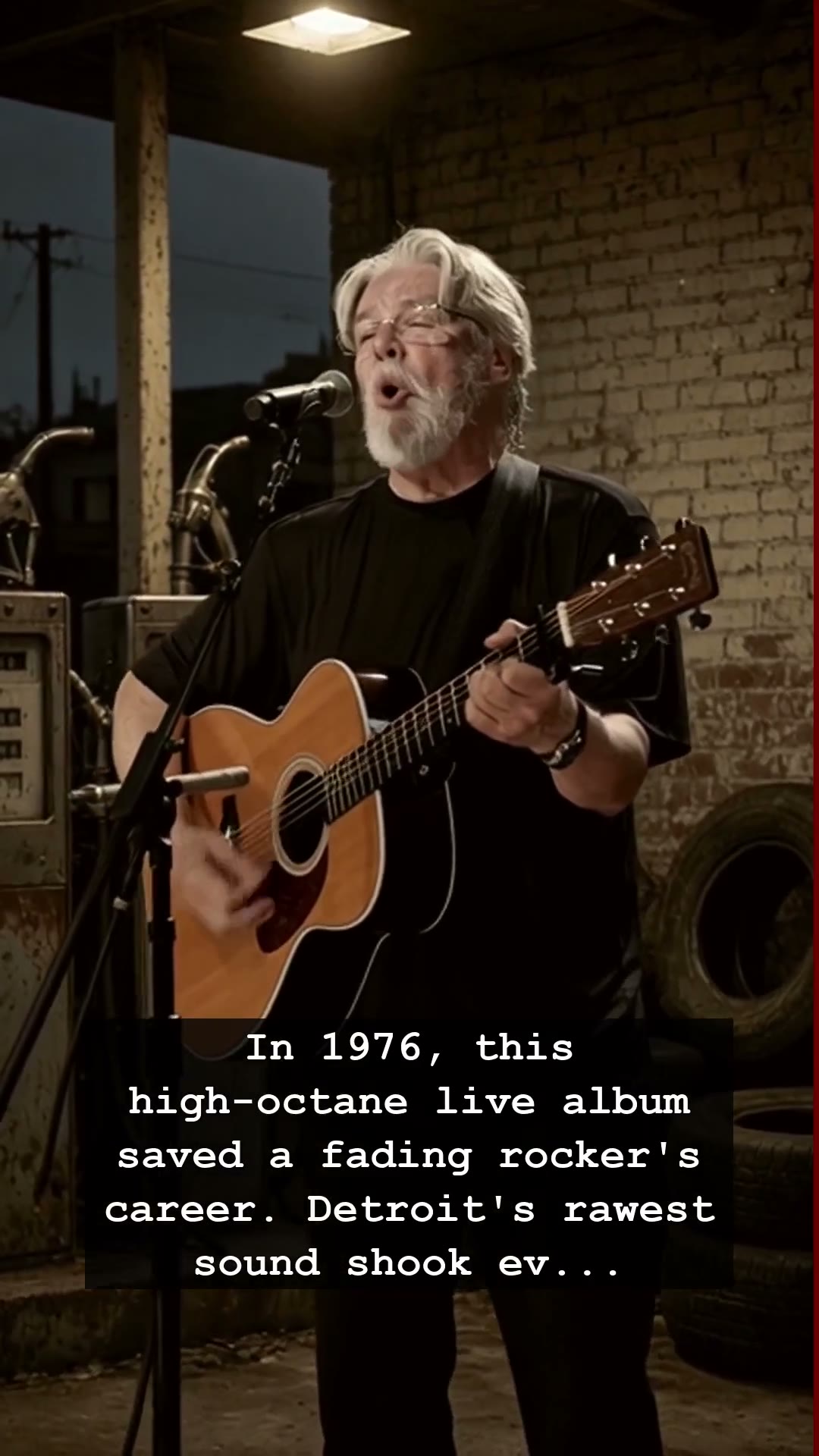
By 1975, the American musical landscape felt like a runaway train losing steam. The grit of early garage rock was being polished away by over-produced studio trickery, and for Bob Seger, a man who had spent nearly a decade grinding through the Midwest club circuit, the dream of stadium-sized stardom felt like a phantom limb. He was tired, nearing thirty, and ready to hang up his guitar. Then came the high-octane fury of a single live recording that would change the trajectory of arena rock forever. If you were driving through the suburbs in the mid-seventies with a Walkman tucked in your bag or a jukebox humming in the corner of your local diner, you knew the raw, sweating, blue-collar power of Bob Seger and the Silver Bullet Band.
The magic wasn’t captured in a sterile, climate-controlled studio. It was pulled from the humid, electric air of Cobo Arena in Detroit. When Bob Seger and the Silver Bullet Band took the stage, they weren’t just playing songs; they were channeling the industrial soul of the Motor City. The resulting 1976 live album, Live Bullet, was a sonic gut-punch that caught the world off guard. It was the antithesis of the disco craze that was beginning to suffocate the radio waves. It was visceral, honest, and undeniably loud, turning a fading songwriter into an immortal stadium legend overnight.
What made the sound of Bob Seger and the Silver Bullet Band so intoxicating was its total lack of pretense. These weren’t songs about fleeting trends; they were anthems about work, lost love, and the relentless pull of the highway. At a time when the spectacle of rock was becoming increasingly flamboyant, Seger remained the guy next door, just with a voice that sounded like it had been tempered in a steel mill. The energy on that record was so palpable you could practically smell the stage lights and the spilled beer of a sold-out Detroit crowd. It proved that the American public was starving for something authentic, something that felt like a heartbeat rather than a calculated marketing ploy.
This era of the mid-seventies was a brutal proving ground. Many of Seger’s peers succumbed to the pressures of substance abuse or the internal band conflicts that tore apart so many iconic groups of the decade. Yet, through sheer persistence and that raw, Midwestern drive, Bob Seger and the Silver Bullet Band clawed their way out of the shadows. They brought an intensity to the arena rock genre that demanded respect, proving that a band didn’t need gimmicks to command a crowd of sixty thousand people; they just needed a story worth shouting.
Even today, listening to the crackle of those opening guitar chords brings back a flood of memories for those who lived it. It reminds us of a time when music felt dangerous, essential, and entirely ours. The legacy of that 1976 breakthrough remains firmly cemented in the pantheon of rock history, a testament to the fact that sometimes, all it takes is one night of pure, unadulterated passion to turn a desperate gamble into a permanent legend. Do you still remember the feeling of hearing that voice for the first time?