
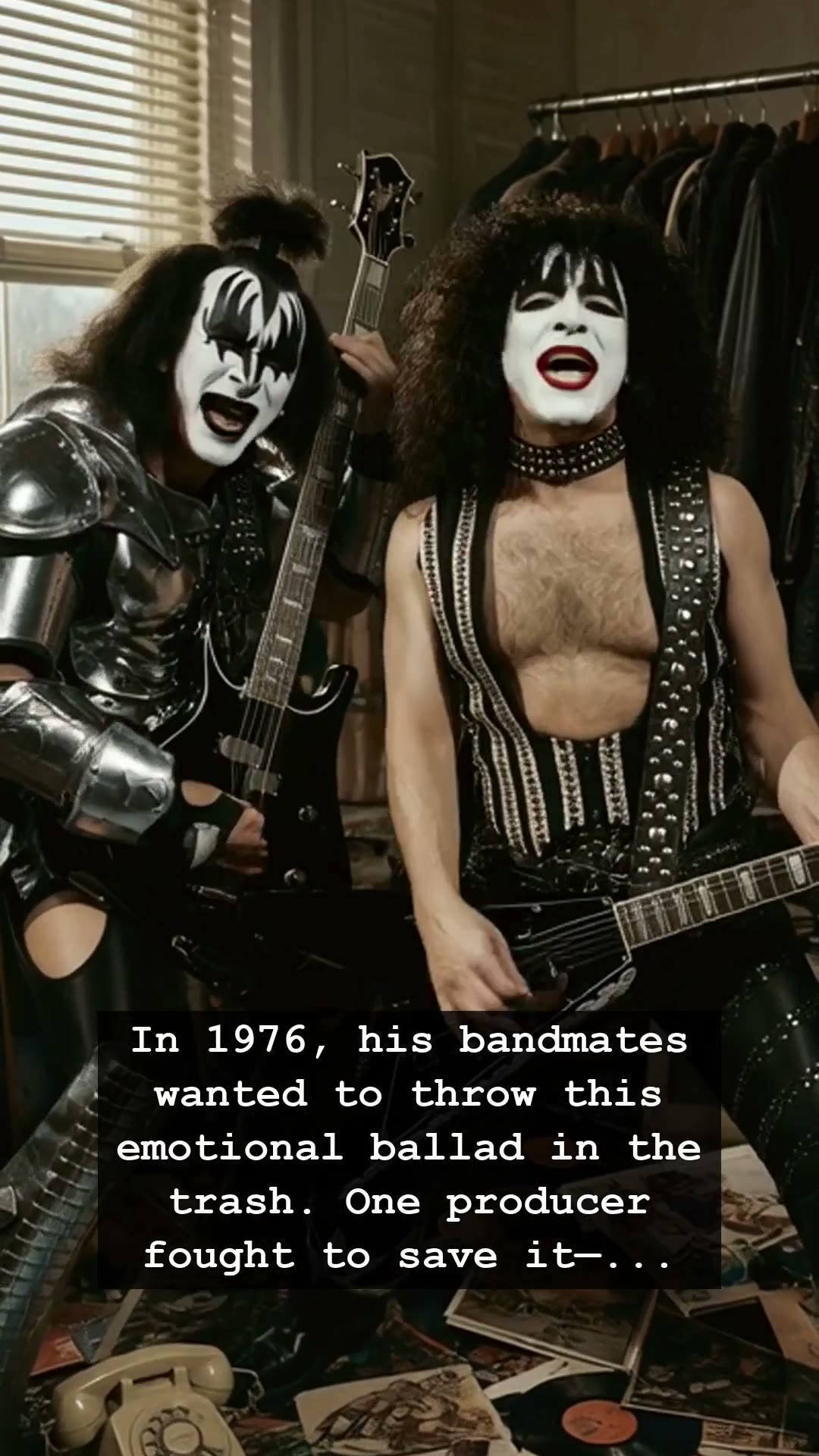
The year was 1976, and the world of arena rock was defined by leather, fire, and the explosive theatrics of KISS. While the band was busy cementing their status as gods of thunder, a quiet, vulnerable piano ballad was sitting in the corner, fighting for its very existence. The song was Beth, and for the members of the band, it was an unwelcome anomaly. They saw it as a soft, whimpering departure from their hard rock identity, a track they were more than happy to bury in the trash bin of a recording studio. To them, it was nothing more than a worthless B-side that had no place alongside their high-octane anthems.
Yet, tucked away in the control room was producer Bob Ezrin. He recognized something his bandmates couldn’t see: a raw, aching honesty that reached beyond the greasepaint and the pyrotechnics. Peter Criss, the band’s drummer, had penned the lyrics about the loneliness of life on the road and the longing for home. It was a deeply personal cry that spoke to the soul of every fan waiting in the dark corners of a crowded arena. Bob Ezrin saw the potential for greatness, not in a loud explosion, but in a stripped-back, melancholic melody that could touch a million hearts at once.
Bob Ezrin fought fiercely to keep the song on the album Destroyer. He insisted on the orchestral arrangement, stripping away the heavy distortion to highlight the fragility of Peter Criss’s voice. The tension in the studio was palpable; it was a battle between the band’s commercial image and an artistic risk that felt dangerously soft. But history has a way of rewarding those who follow their gut. When the track was finally released, it didn’t just survive—it soared. It became a cultural touchstone that defined a generation, proving that even the most bombastic rock stars have a quiet, broken heart waiting to be heard.
Decades later, the song remains a haunting masterpiece. It evokes memories of the 70s, of FM radio broadcasts, and the sticky floors of concert halls before the digital age took hold. It serves as a reminder that behind the massive tours and the elaborate stage personas, there was real, human pain. Peter Criss delivered a performance that felt like a secret whispered into a telephone, a stark contrast to the arena rock excess that was the standard of the era. It captured the melancholy of touring life in a way that remains unmatched by any of their contemporaries.
Today, Beth stands as a testament to the power of a single visionary. Without the stubborn insistence of Bob Ezrin, one of the most iconic songs in rock history would have been lost to the dustbin. It serves as a poignant reminder that drama and conflict are often the catalysts for the most enduring art. When you hear those first notes of the piano today, don’t just hear a ballad; hear the story of a song that almost never was. As the final chords fade out, you might still feel that same sting of nostalgia, perfectly preserved in time.