
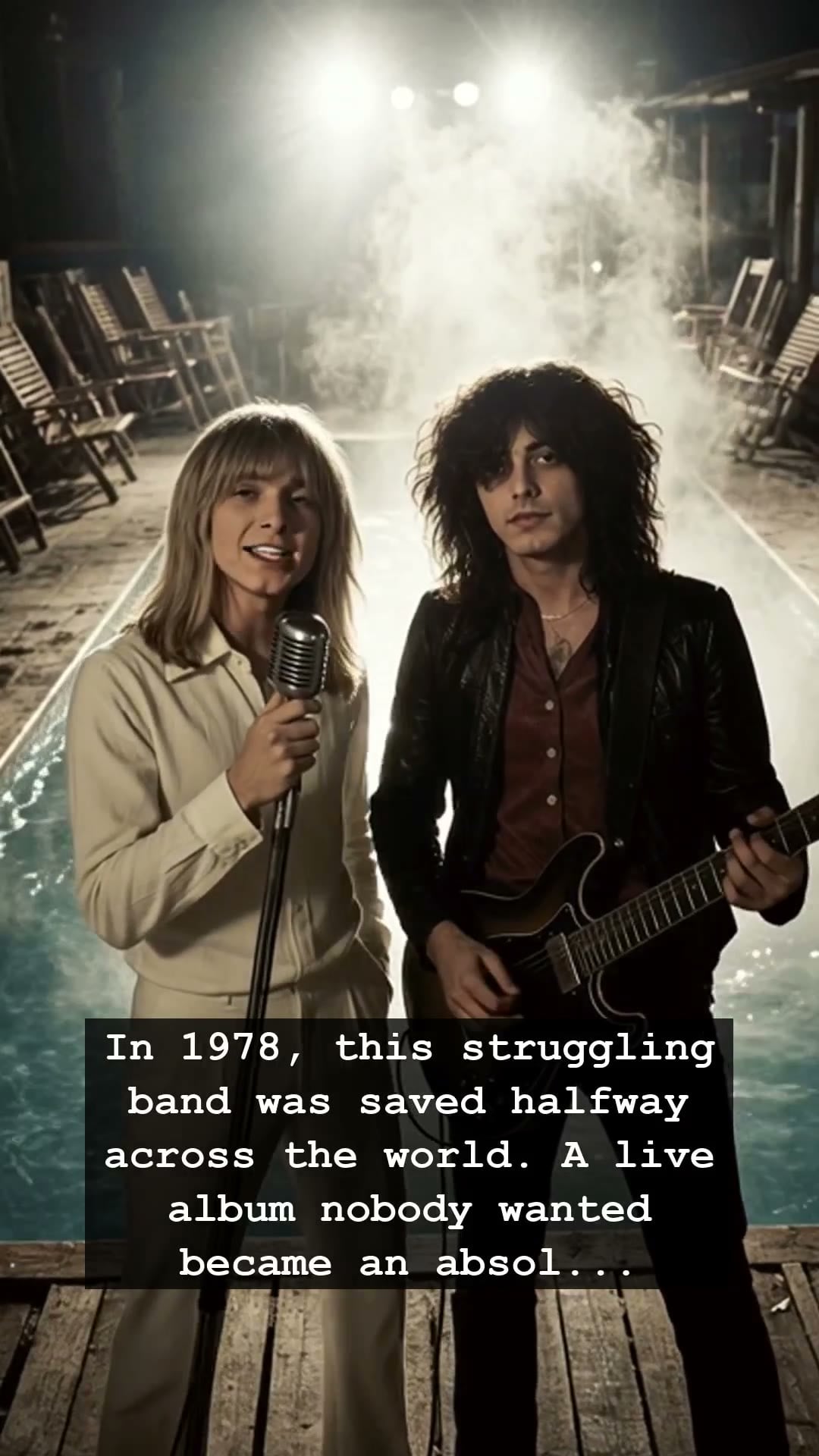
In 1978, the American rock scene was a brutal, unforgiving battlefield. While disco was beginning to dominate the airwaves and the grit of punk was shaking the underground, Cheap Trick found themselves stranded in the doldrums of commercial obscurity. Despite their blistering musicianship and eccentric stage presence, the band was effectively washed up in their home country. Their record label had all but given up on them, viewing their studio efforts as a costly experiment that simply didn’t translate to the charts. They were ghosts haunting their own career, until a desperate, last-ditch gamble sent them halfway across the world to Japan.
Japan in the late seventies was a different universe for American rock acts. When Cheap Trick stepped onto the stage at the legendary Budokan arena, they were greeted not by the lukewarm reception they were accustomed to in the states, but by a deafening, hysterical roar that felt like an earthquake. The audience there didn’t just listen to the music; they worshipped it. Their producer, Tom Werman, had the foresight to capture the electricity of that night, even though the band was hesitant to release what they considered a standard live recording. They had no idea that they were accidentally defining the blueprint for the entire arena-rock era.
The resulting masterpiece, At Budokan, was never meant to be a worldwide sensation. It was initially intended to be a local souvenir for the Japanese market, a niche release to satisfy the fans who had packed the stadium. But as the record began to circulate back in the United States, something magical happened. The raw, unfiltered energy of the performances—the power-pop hooks of I Want You to Want Me and the infectious swagger of Surrender—seemed to leap out of the speakers, capturing the imagination of a generation tired of overproduced radio fluff. Suddenly, Cheap Trick was no longer a band on the verge of breaking up; they were international icons.
This album remains a testament to the fact that music is often a product of timing, geography, and the unquantifiable magic of a live performance. It transformed the industry’s perception of live recordings, proving that a band’s true spirit wasn’t found in the polished perfection of a studio, but in the sweat, volume, and chaotic energy of an arena full of screaming fans. Cheap Trick became the bridge between the underground power-pop scene and the global stadium phenomenon that would dominate the eighties.
Decades later, when we hear the opening notes of those tracks, we aren’t just listening to a band; we are hearing the echo of a moment where history pivoted. The legacy of Cheap Trick is etched into every arena-rock anthem that followed, reminding us that sometimes the greatest victories are found when you are furthest from home. Does the sound of that stadium roar still pull you back in time? Every time the needle drops on that vinyl, the spirit of 1978 comes back to life, louder and bolder than ever before.