
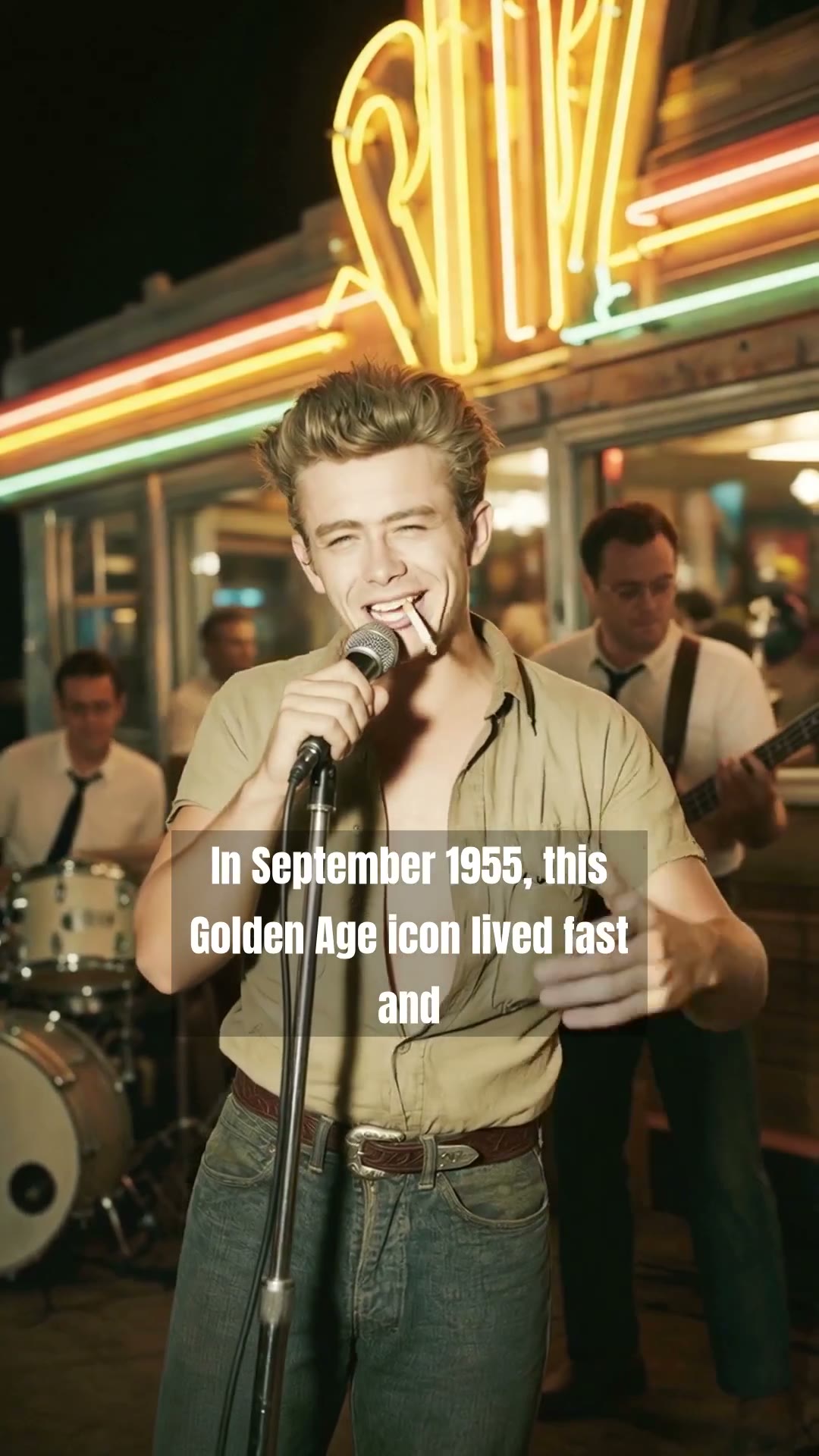
In the sprawling tapestry of the Golden Age of Hollywood, few figures flicker with the same haunting brilliance as James Dean. He was the quintessential rebel, a man who arrived on the screen like a lightning strike, leaving a scar of longing in the hearts of a generation. September 1955 remains etched in cinematic history not merely as a date, but as a moment where the heartbeat of an era seemed to stutter. At just twenty-four years old, James Dean, the boy who taught the world how to brood, met a tragic end in a fatal car crash on a lonely California road. The Porsche 550 Spyder, which he dubbed Little Bastard, became the final stage for a star whose light was only just beginning to reach its zenith.
To understand the gravity of his loss, one must remember the atmosphere of the 1950s. While Method Acting was slowly transforming the landscape of American cinema, James Dean brought an raw, unvarnished vulnerability to the screen that was previously unseen. In Rebel Without a Cause, he became the voice for a generation of restless youth, capturing an existential angst that resonated far beyond the confines of the theater. He did not merely recite lines; he embodied the confusion, the yearning, and the fragile humanity of his characters. It was this rare, electric intensity that turned him into a cultural icon almost overnight, solidifying his place on the Walk of Fame before he had even seen his final project reach the audience.
His performance in Giant, the sprawling epic that premiered shortly after his passing, serves as a bittersweet testament to his potential. Watching him inhabit the role of Jett Rink, one is struck by the maturity he displayed—a quiet, burning ambition that suggested a long and storied career was ahead of him. Instead, history solidified him as a permanent youth. For those of us who grew up clutching VHS tapes of his films, rewatching these performances feels like visiting a ghost who refuses to be forgotten. His presence on screen is so vibrant that it defies the passage of decades, making the tragedy of his departure feel as sharp and immediate as if it happened yesterday.
James Dean left behind only three major films, yet his shadow looms larger than many who worked for half a century. He represents the duality of the American dream: the meteoric rise and the devastating, quiet fall. He taught us that art is not defined by how long one performs, but by how deeply one touches the collective soul of an audience. Even now, his image serves as a permanent anchor for the rebellious spirit, a symbol of the beauty found in imperfection and the melancholy of promise cut short.
As the golden light of the silver screen continues to fade into the digital age, the legend of James Dean persists as a reminder of an era where movies were not just blockbusters, but intimate conversations with humanity. We honor him not for the tragedy that took him, but for the profound authenticity he shared in those fleeting, shimmering moments. May his story continue to remind us to cherish the artists who dare to burn brightly, leaving us with memories that prove the best of cinema never truly dies.