
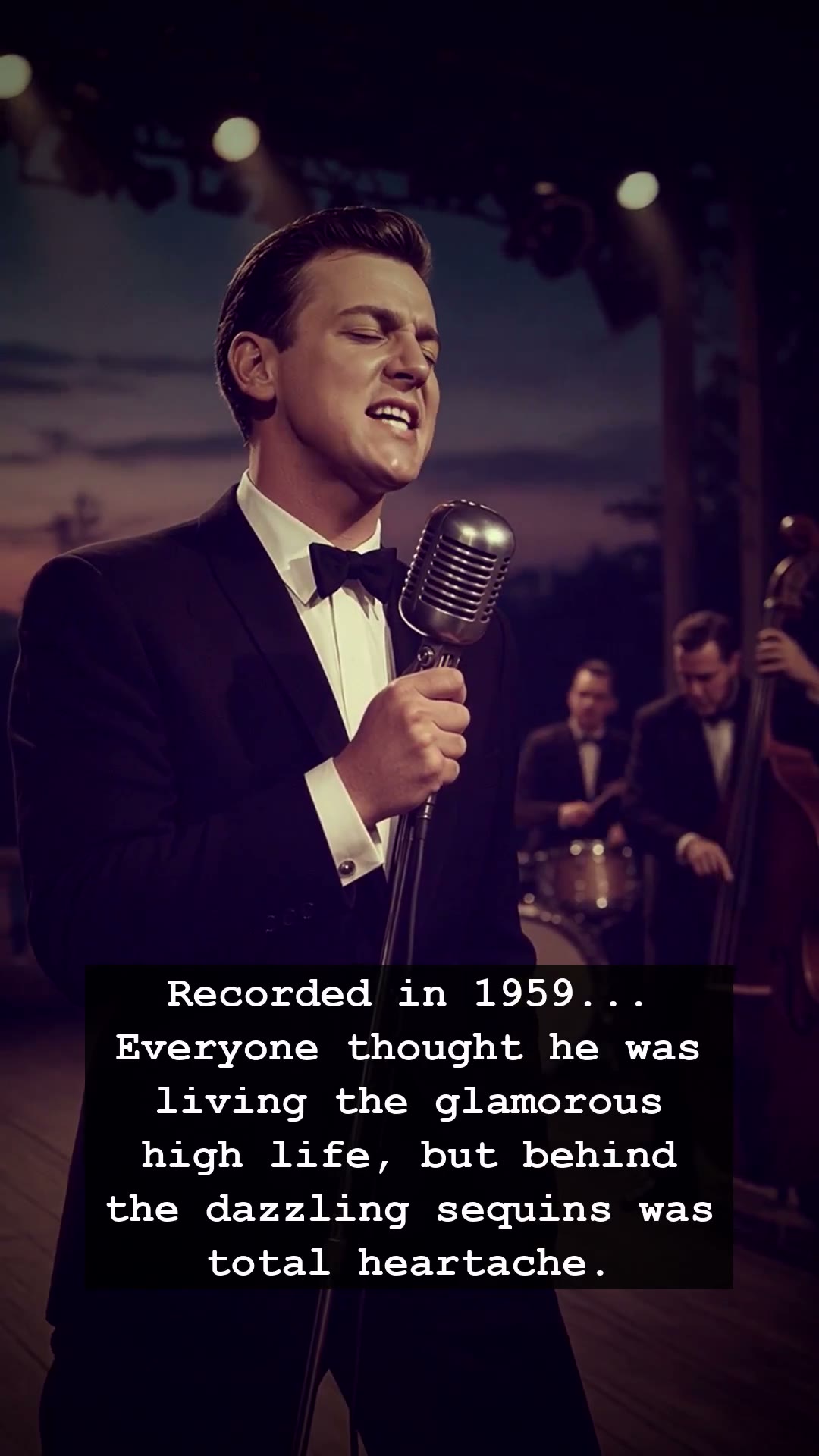
The stage lights at the Copacabana in 1959 did not just illuminate Bobby Darin; they transformed him into a gleaming vessel of mid-century American ambition. Dressed in a sharp, sequined suit that caught every flicker of the spotlight, he looked like a man who had conquered the world. To the millions listening on their transistor radios or playing his 45s on a heavy jukebox, Bobby Darin was the epitome of the lucky, charismatic star. But behind that dazzling, toothy grin and the finger-snapping rhythm of his chart-topping hits, the reality was a haunting portrait of survival. While the world saw a golden boy, Bobby Darin was fighting a private, desperate battle against a body that felt like a ticking time bomb.
Born Walden Robert Cassotto, the man we know as Bobby Darin lived under the shadow of a childhood illness that doctors promised would claim his life before he reached his sixteenth birthday. By 1959, he was living on borrowed time, dancing across stages with an intensity that only someone acutely aware of their own mortality could possess. Every performance was a high-stakes gamble against fate. While his peers were simply chasing fame, Bobby Darin was chasing an eternity that he wasn’t sure he would ever get to see. This wasn’t just a career; it was an act of defiance against the silence of a premature grave.
His meteoric rise was fueled by this urgency. Whether he was crooning standards that rivaled Sinatra or pushing the boundaries of the emerging rock and roll sound, he moved with a frantic energy. To the audience, it was pure showmanship. In the wings of the stage, away from the adoring screams of fans, it was the sound of a man trying to outrun his medical charts. This dichotomy—the glitter of the suit versus the fragility of the heart underneath—is what gives his 1959 era its melancholic weight. He was a supernova, burning through his fuel because he believed the lights would be extinguished far sooner than they actually were.
The industry of the late fifties was built on a curated facade, an era where the public expected their idols to be invincible. Bobby Darin played the part perfectly, yet his story serves as a raw reminder of the human cost behind the veneer of celebrity. He remains a symbol of the resilience required to chase a dream when you are physically breaking apart. His life wasn’t defined by the fame he acquired, but by the relentless courage he displayed while standing in the glow of the spotlight.
Today, we look back at Bobby Darin not just as a legend of the golden age, but as a man who proved that art can transcend even the darkest of physical constraints. His voice continues to vibrate through the decades, capturing the spirit of a time when the world seemed to hold its breath for every note. Next time you hear the opening swell of his music, listen past the sequined charm and hear the heartbeat of a survivor. He lived his life in a rush, leaving us with a catalog of music that remains as vital and heartbreaking today as it was in the dim, smoky clubs of 1959.