
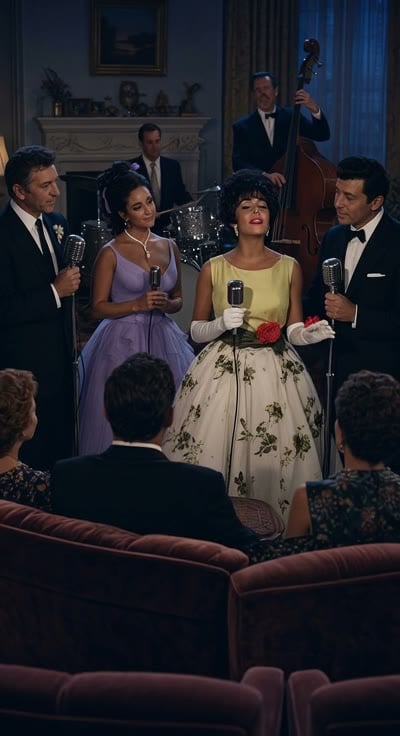
In the mid-1960s, the golden age of Hollywood was a world of polished perfection and curated elegance. Audiences across the globe were accustomed to seeing stars like Elizabeth Taylor draped in silk and diamonds, their every movement choreographed to project an air of untouchable grace. The silver screen was a place of fantasy, where the leading ladies were rarely expected to show the gritty, unvarnished edges of human reality. Yet, in 1966, Elizabeth Taylor defied these rigid industry expectations, proving that beneath the veneer of the ultimate screen siren lived a fearless artist ready to dismantle her own image for the sake of the craft.
When the project Who’s Afraid of Virginia Woolf? was announced, many in the industry were skeptical. The role of Martha was far removed from the glamour that Elizabeth Taylor had been synonymous with for decades. To portray this middle-aged, bitter, and volatile woman, Taylor did the unthinkable for a star of her caliber. She cast aside the couture gowns and the signature poise, instead gaining thirty pounds and wearing heavy, aging makeup that stripped away the youthful glow the world had come to adore. It was a radical act of vulnerability that sent shockwaves through the studio system.
This transformation was more than just a physical challenge; it was a testament to the power of Method Acting that was rapidly reshaping the industry during that era. By immersing herself in the complexities of a crumbling marriage and the sharp, jagged edges of her character, Elizabeth Taylor pushed her boundaries further than any of her contemporaries dared. She traded the safety of being a Hollywood icon for the danger of being truly human. When the cameras rolled, the woman on screen was no longer just the starlet the tabloids obsessed over; she was a raw, aching force of nature that demanded the audience’s undivided attention.
Her performance was met with universal acclaim, eventually leading to a hard-won Oscar night victory that silenced every critic who had doubted her range. It was a moment that served as a turning point in her career, proving that Elizabeth Taylor possessed a depth of soul that transcended her beauty. She showed that one could be a cultural fixture while simultaneously being a serious performer capable of profound psychological immersion. For those of us who grew up watching her transition from a child star to a powerhouse, this performance remains a hallmark of true cinematic courage.
Decades later, the legacy of this performance continues to resonate, reminding us of a time when stars took genuine risks to tell meaningful stories. Even in the age of digital transformation, the grit and determination shown by Elizabeth Taylor in 1966 feels authentic and timeless. She remains a symbol of an era where art was prioritized over perfection. As we look back at the flickering lights of the golden age, we are reminded that true legends are defined not by how they look, but by how deeply they dare to feel for their craft.