
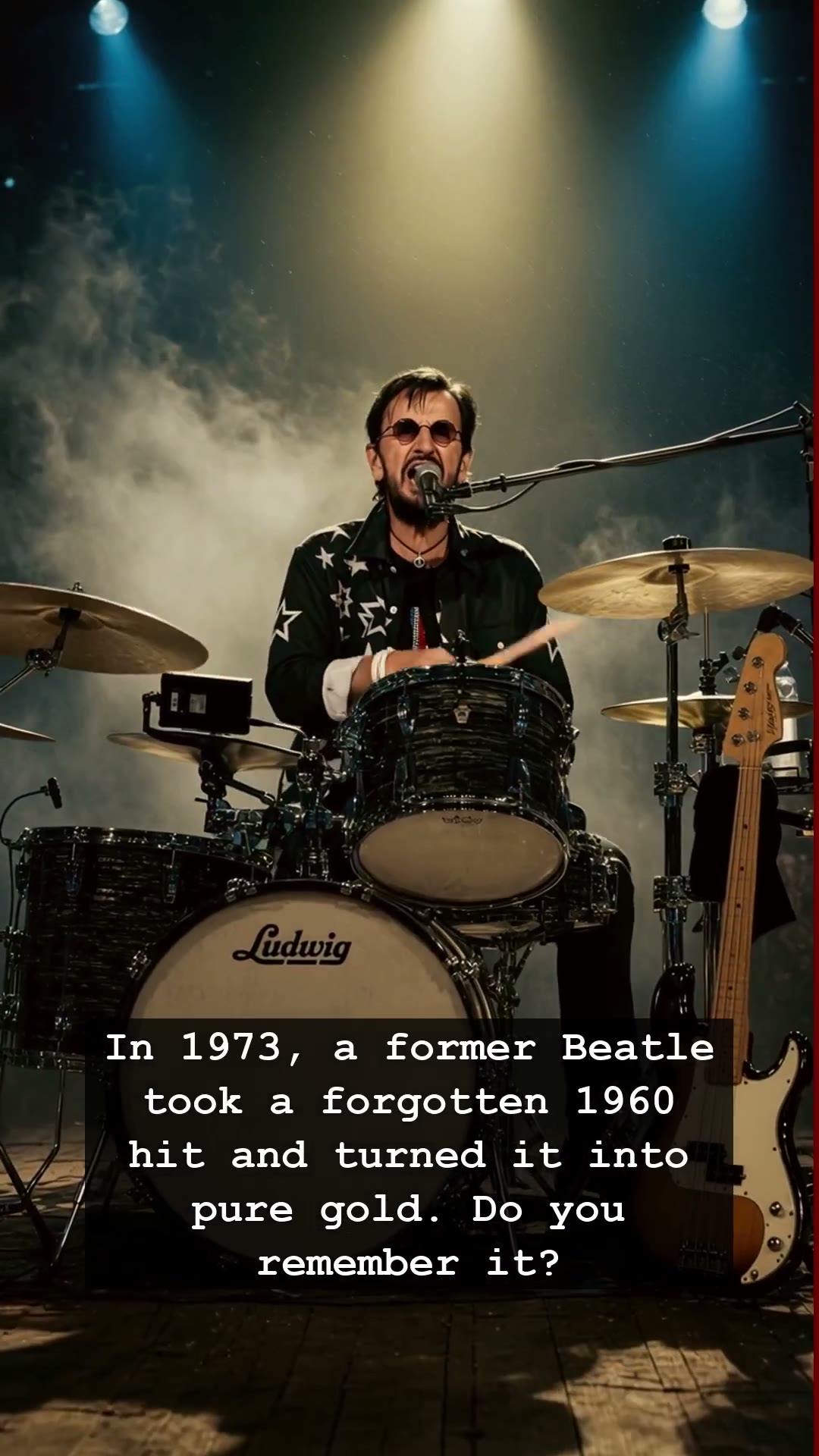
It was 1973, a time when the world was changing faster than the spinning vinyl on a teenager’s turntable. The Beatles had long since dissolved, leaving behind a vacuum in the hearts of millions. While everyone was watching to see if Lennon or McCartney would land the next knockout punch, it was Ringo Starr—the man often dismissed as the lovable drummer—who delivered one of the most unexpected chart-topping smashes of the decade. He did it not by reinventing himself, but by reaching back into the crates to pull out a forgotten, sparkling gem from 1960 that nobody else dared to touch.
That song was You’re Sixteen, a tune that had originally bounced off the charts in its first run. When Ringo Starr stepped into the studio, he didn’t just record a cover; he orchestrated a reunion of sorts. With a little help from his legendary friends, including Harry Nilsson and the legendary saxophonist Bobby Keys, the track became a slice of pure gold. It was a nostalgic nod to a simpler time, delivered with a rhythmic swagger that only a former Beatle could provide. The song was more than just a melody; it was a cultural bridge connecting the innocence of the pre-British Invasion era to the glittering, slightly cynical landscape of the seventies.
Behind the scenes, the recording process was the stuff of rock and roll legend. The studio was a revolving door of icons, fueled by late nights and the effortless chemistry that defined the era of the jukebox. Ringo Starr possessed a unique charm that drew talent toward him like a magnet. While the public was preoccupied with the grit of Arena Rock and the looming shadow of the disco craze taking over clubs like Studio 54, Ringo reminded everyone that a great pop song never truly loses its bite. He proved that even the quietest Beatle had the Midas touch when it came to capturing the zeitgeist of the American airwaves.
Yet, the success of You’re Sixteen highlighted the strange dichotomy of Ringo Starr’s post-Beatles career. Here was a man who had sat at the center of the greatest cultural earthquake in history, now finding his own footing as a solo artist. The track soared to the top of the Billboard Hot 100, a feat that silenced any lingering critics who thought he was merely a footnote to the Lennon-McCartney machine. It was a moment of vindication, a testament to his innate sense of timing and his ability to make a song feel like a warm, familiar embrace to a nation yearning for comfort.
Even decades later, hearing that iconic saxophone solo instantly transports you back to a time when a transistor radio was your best friend and the hit parade was the only news that mattered. Ringo Starr didn’t just resurrect a forgotten 1960 track; he validated the power of nostalgia. He reminded us that the songs of our youth don’t stay buried—they wait for the right moment to come home again. So, next time you hear those opening notes, take a breath and remember when the drummer became the king of the charts.