
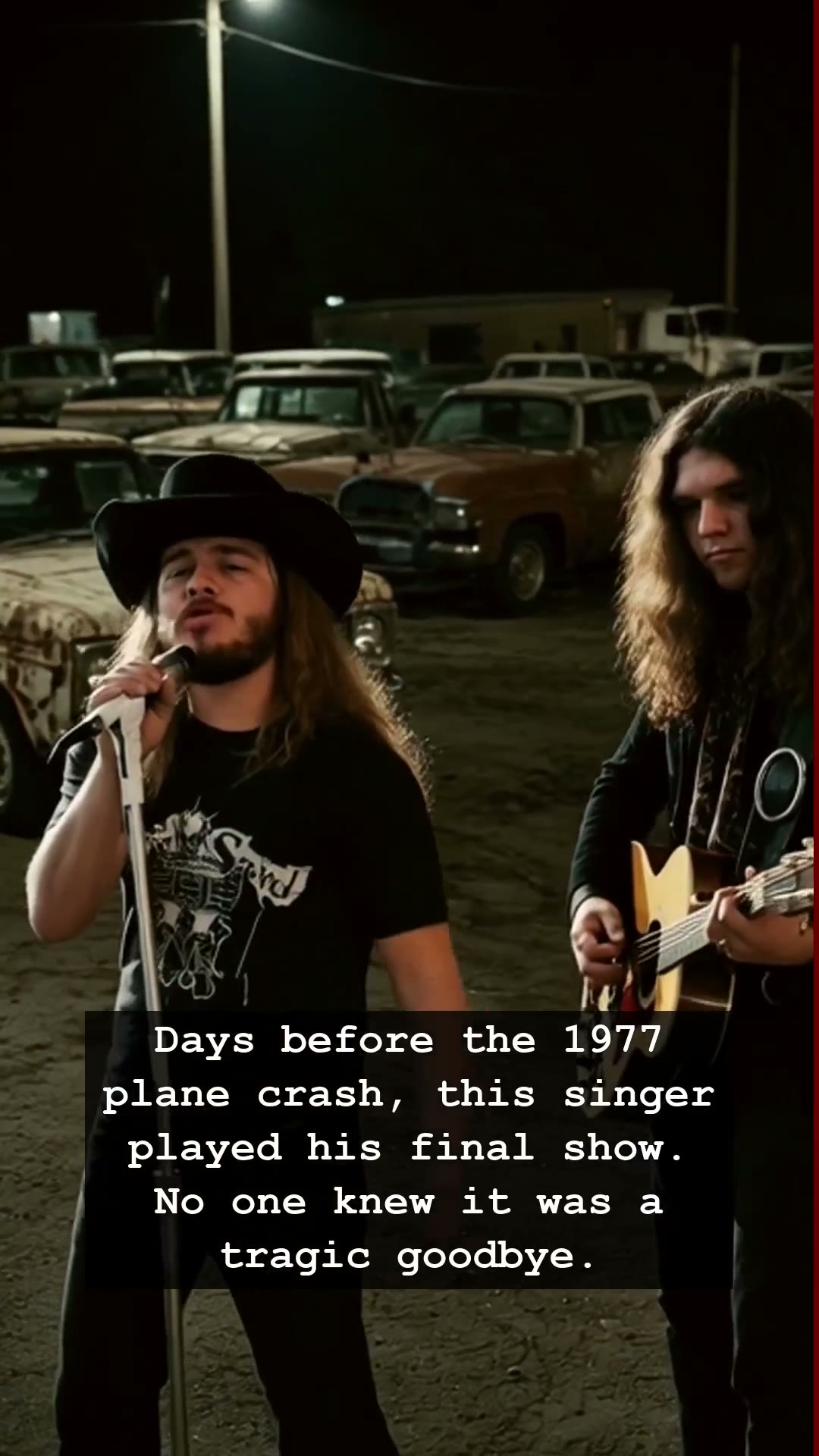
It was October 1977, and the air was thick with the scent of amplifier tubes and cheap beer. Ronnie Van Zant, the gravel-voiced poet of the American South, stood on the stage for what would be the very last time. To the thousands of fans screaming for Free Bird, he was an invincible titan of Southern rock, a man whose presence filled the arena with raw, unfiltered energy. Nobody in that Greenville, South Carolina crowd knew that the leather-clad frontman was singing his own requiem. Just three days later, the world of music would fall silent in a dark Mississippi swamp, forever altering the landscape of rock history.
Ronnie Van Zant was more than just a lead singer; he was the blue-collar conscience of a generation. With Lynyrd Skynyrd, he bridged the gap between the gritty reality of life in Jacksonville and the soaring heights of the FM radio charts. The band had spent years touring in cramped vans, living on cigarettes and dreams, eventually evolving into an arena-filling force that defined the spirit of the seventies. Yet, beneath the gold records and the thunderous applause, the touring lifestyle was taking a brutal toll. The charter plane, a Convair CV-240, was meant to be a luxury, but it quickly became a death trap as fuel gauges flickered and failed in the humid night air.
When the plane ran out of fuel and plummeted into the trees near Gillsburg, Mississippi, it didn’t just end a band; it decapitated a cultural movement. The suddenness of the impact left the nation in shock. For fans who grew up listening to the band’s anthems on their scratchy vinyl records or blasting them through a Walkman, the loss of Ronnie Van Zant felt like a personal betrayal by fate. The tragedy underscored the dark, often ignored underside of the touring rock industry—a world where the boundary between fame and mortality was far thinner than anyone dared to admit.
Even decades later, the ghost of that night still lingers. Critics and musicians still debate the influence of Lynyrd Skynyrd, but no one debates the power of the man at the helm. Ronnie Van Zant possessed a rare, uncanny ability to capture the struggle of the common man, turning simple storytelling into timeless myth. His lyrics were not just songs; they were sermons for the disaffected, echoing through roadhouses and stadium rafters alike. When he died, he took the untamed, dangerous spirit of the Southern rock revolution with him, leaving behind a vacuum that no subsequent act could ever truly fill.
Today, we look back at his final show as a haunting piece of history, a frozen moment in time where the music was loud, the stakes were high, and the future was supposed to last forever. As you listen to those iconic piano chords fading into the distance, remember that Ronnie Van Zant remains immortal, trapped in the amber of a legendary, tragic melody that refuses to fade away. It is a reminder to cherish the song, for we never know when the final note will finally drift into silence.