
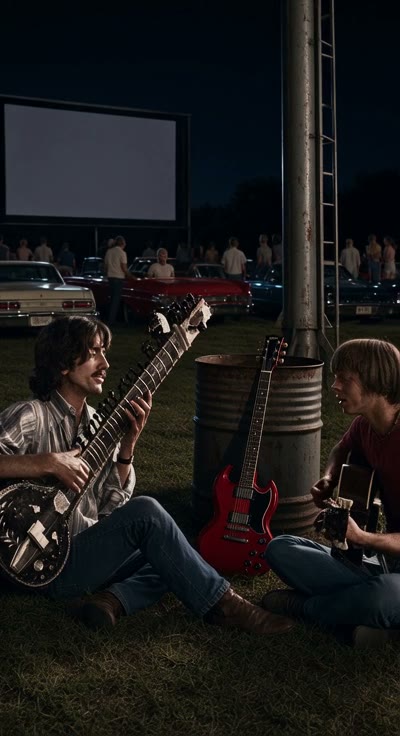
In the golden era of 1968, the airwaves were dominated by the innovative sounds of the British Invasion. Among the most daring tracks released that year was The Beatles’ raucous masterpiece, Helter Skelter. Paul McCartney intended it to be an experiment in loud, distorted rock—an attempt to capture the chaotic energy of the era. However, while the rest of the world danced to the beat of the swinging sixties, a man named Charles Manson was hiding in the shadows, listening to the song with a terrifying, fractured logic that would eventually stain American history forever.
Charles Manson was not just another fringe drifter; he was a master manipulator who perceived the music of his time as a coded language. To the average listener, Helter Skelter was just a song about a playground slide. To Charles Manson, it was a dark prophecy. He became obsessed with the idea that the lyrics were a hidden message from The Beatles, warning of an impending apocalyptic race war that he labeled Helter Skelter. He believed that he and his followers were the chosen ones tasked with triggering this global catastrophe, a delusion that turned a classic rock anthem into the soundtrack for a horrific series of murders.
As the decade progressed, the counterculture movement that once promised peace and love at festivals like Woodstock began to show its cracks. The influence of Charles Manson grew within the isolation of the desert, away from the glitz of Studio 54 and the mainstream radio charts. He utilized his magnetic, albeit disturbed, personality to convince his followers that the violence he preached was merely a fulfillment of the sonic instructions he found within the grooves of the White Album. The sheer dissonance between the lighthearted intent of the band and the violent reality unleashed by Charles Manson remains one of the most chilling chapters in the annals of music history.
By the summer of 1969, the terror had moved from the abstract to the devastatingly real. The gruesome crimes committed by the Manson Family left a nation in shock, forever altering the public perception of the hippie movement. When the dust settled and the investigations began, the term Helter Skelter was found scrawled in blood at the scenes, a grim testament to how the mind of Charles Manson had hijacked a piece of pop culture to justify atrocities that defied human comprehension. It was a dark moment where the boundary between artistic expression and psychotic manifestation blurred with fatal consequences.
Decades later, we still look back at the 1960s with a mix of awe and trepidation. The legacy of Charles Manson serves as a haunting reminder of how music, in its rawest form, holds the power to influence the human psyche. Even today, when the familiar electric guitar riffs of that 1968 classic begin to play, a shadow of that dark prophecy flickers in the background. It is a stark lesson that the songs we love reflect not only our brightest dreams but also the deepest, most dangerous voids of the human condition. What do you hear when the music stops?